Back to the roots
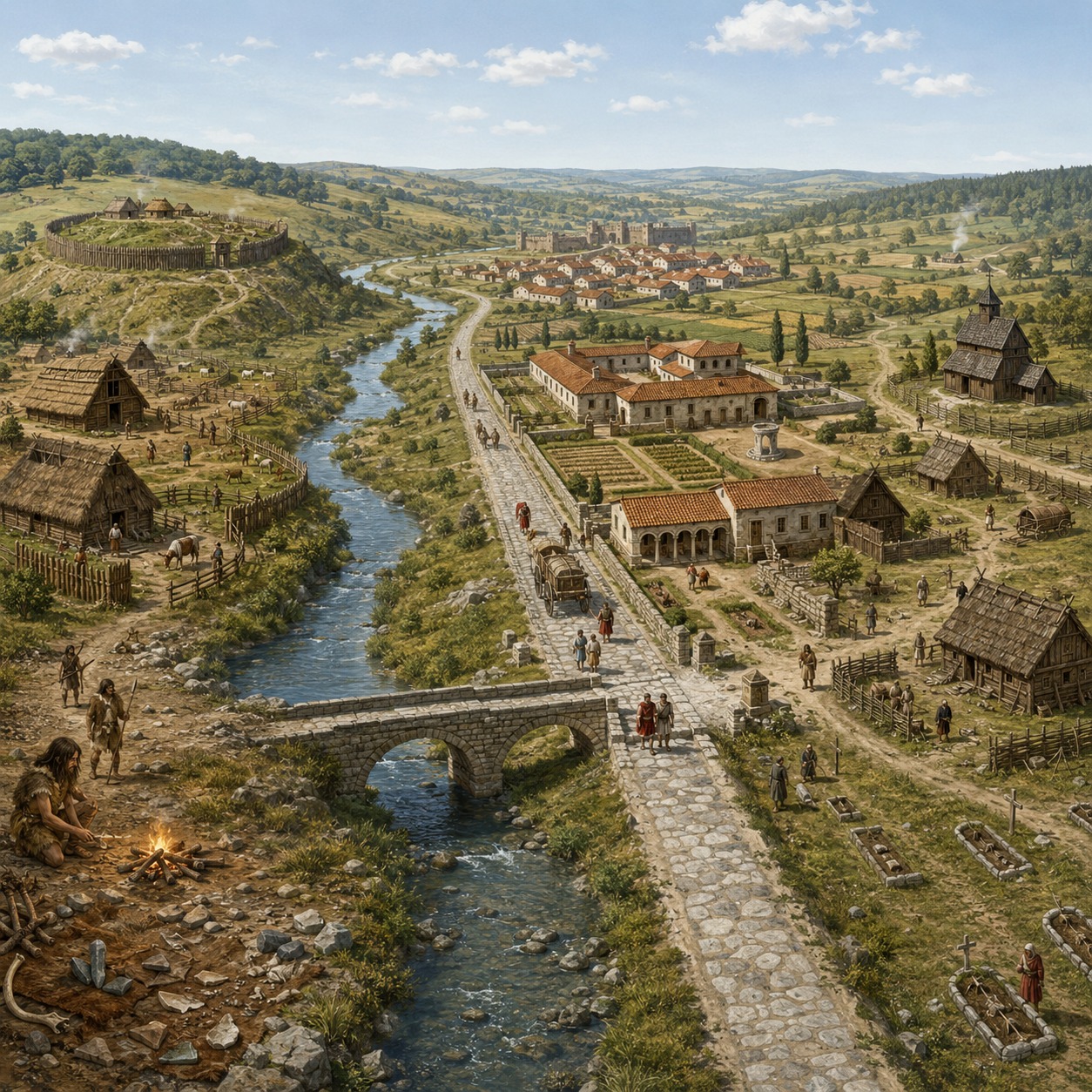
Experience an immersive soundscape through the Prehistory and Early History of Central Europe, inspired by archaeological and historical sources and brought to life through artistic interpretation.
·
6 songs
2:14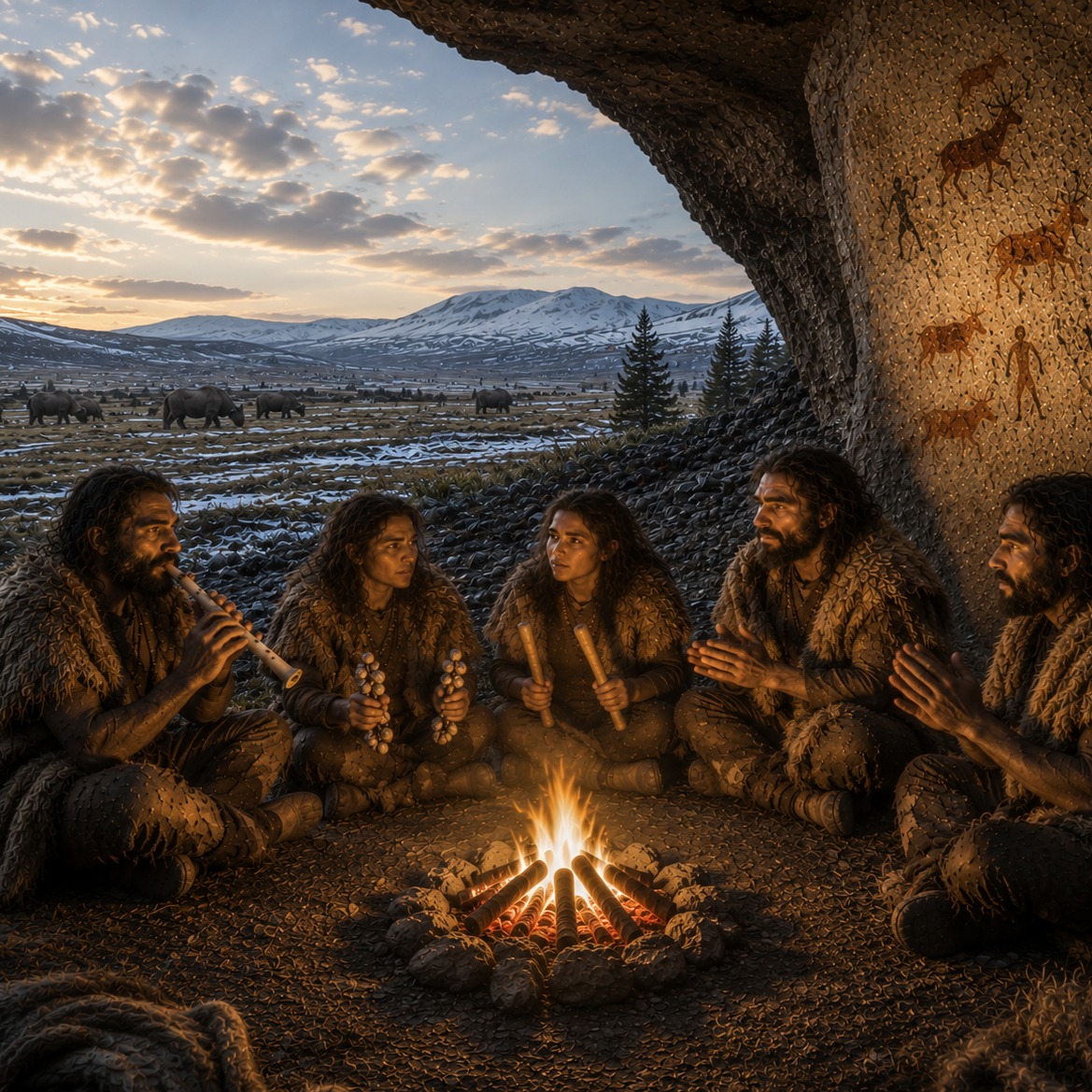
Epic Paleolithic music inspired by Ice Age Europe, before the Neolithic period, Feature bone flute melodies and bullroarers as the primary instruments, accompanied by wooden clappers, hand clapping, shell rattles, Use only organic acoustic sounds, No drums, Include male and female voices performing wordless chants, vocal drones, call-and-response singing, and simple vocal syllables without any intelligible language, The singing should feel communal, natural, and timeless, reflecting social gatherings around a campfire, Atmospheric, immersive, mysterious, and deeply connected to nature, Subtle wind, fire ambience, and the acoustics of a rock shelter or open Ice Age landscape, No modern instruments, no electronic sounds, no orchestral elements, no modern harmonies, Focus on bone flutes, bullroarers, percussion, human voices, and the primal atmosphere of prehistoric hunter-gatherer communities, ‑string instruments, ‑drums, ‑electronic, ‑orchestral, ‑modern harmonies
2:57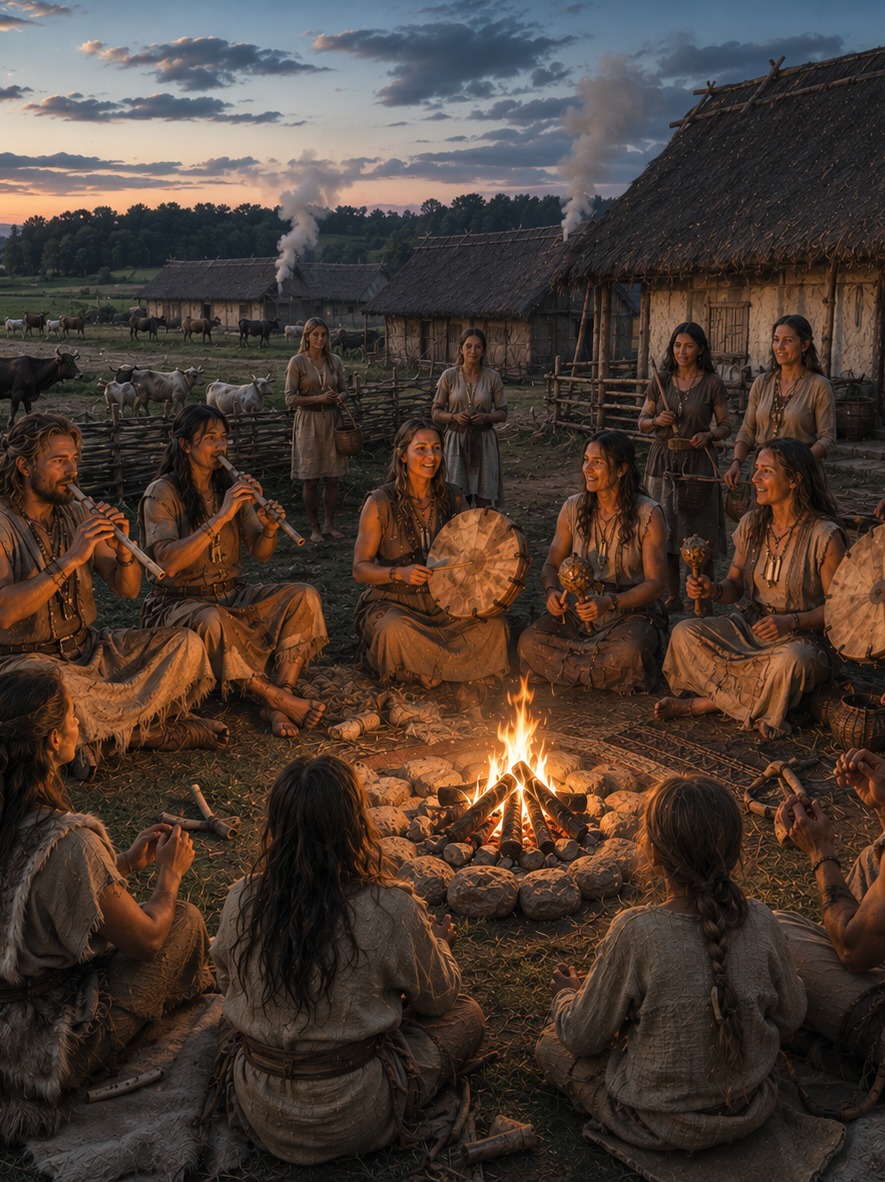
Epic Neolithic European music inspired by early farming communities and village gatherings, Frame drums, hand drums, bone and wooden flutes, rattles, wooden percussion, hand clapping, communal singing, campfire ambience, seasonal celebrations, and organic acoustic instruments, Men and women perform call-and-response vocals, rhythmic chanting, and wordless songs in a shared community setting, Do not use any modern languages or intelligible lyrics, Instead, use simple vocal syllables such as “ha, ” “ho, ” “ya, ” “na, ” and “heya” in natural, repetitive patterns, The vocals should sound timeless, communal, and deeply connected to nature, agriculture, and seasonal rituals, Atmospheric, immersive, rhythmic, and cinematic, No electronic instruments, no synthesizers, no modern orchestration, no guitar and no fantasy elements, Focus on drums, flutes, rattles, wooden percussion, hand clapping, human voices, and the atmosphere of a Neolithic European settlement, ‑electronic
3:31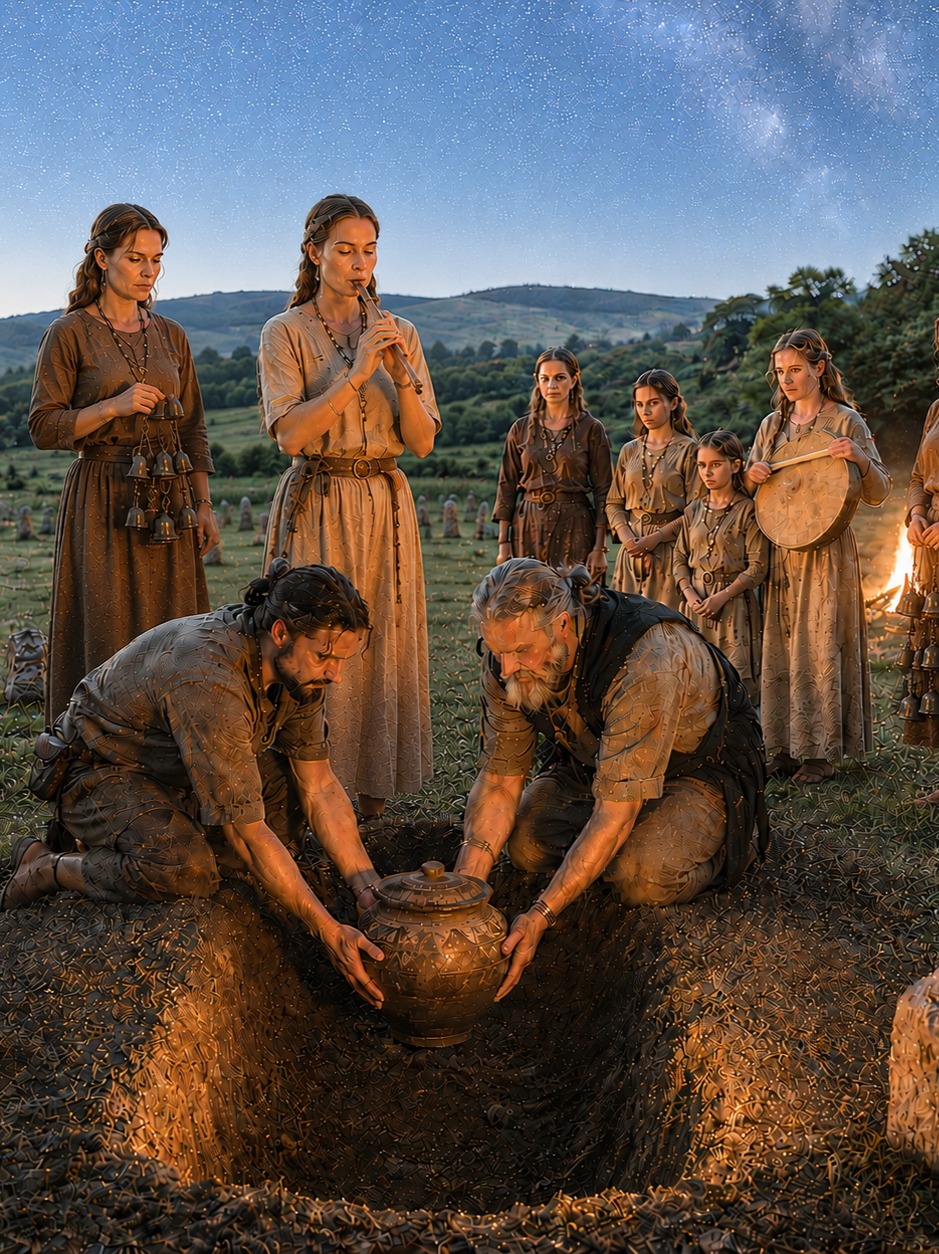
Authentic ritual music of the Central European Urnfield Culture, based on archaeological evidence, Deep hide drums, bronze rattles, bronze jingles, small bronze bells, ritual bell pendants, clay rattles, wooden clappers, antler percussion, natural animal-horn and bronze-horn calls, sparse bone flutes and reed pipes, No modern instruments, no orchestral sounds, no synthesizers, Vocals only as non-verbal human sounds: long sustained vowels (ah, oh, oo, eh), humming, deep drones, breath sounds, overtone-like resonances, ritual calls and collective vocal textures, Voices function as instruments rather than language, Mixed male and female voices singing collectively, Atmosphere of a nocturnal ceremony around sacred fires, honoring ancestors, solar symbolism, bronze metallurgy and seasonal rites, Repetitive rhythms, trance-like energy, earthy, raw and organic sound, Open-air acoustics with subtle echoes from hills and forests, No Viking, Celtic fantasy, Roman, medieval or cinematic influence, ‑electronic, ‑orchestral, ‑viking, ‑medieval, ‑bagpipe
3:24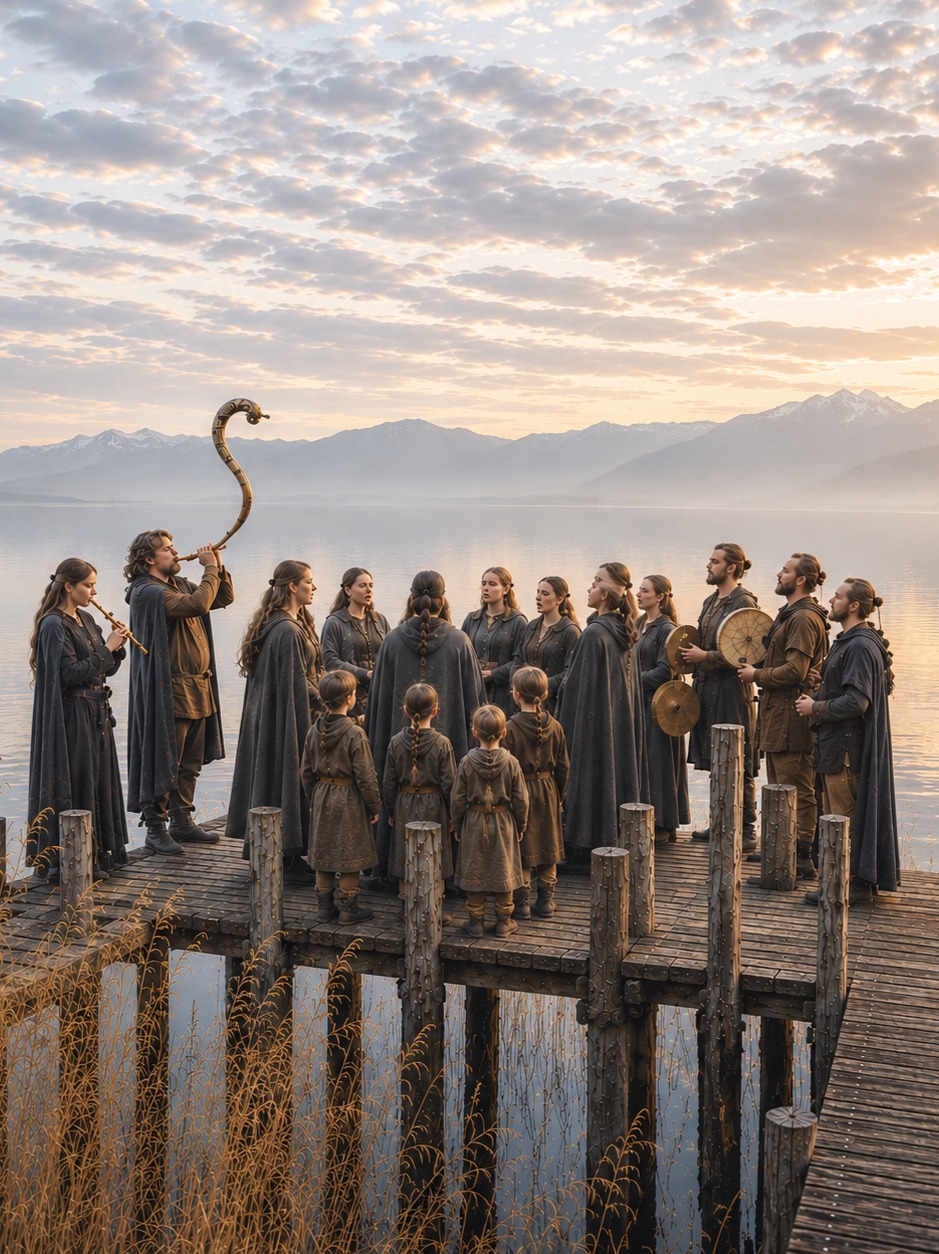
Historically inspired Celtic La Tène ritual chant based on archaeological evidence, Deep, resonant and earthy vocals with a raw natural timbre, minimal vibrato, clear diction and emotional restraint, Sounds like a respected elder singing outdoors, answered by a unified, slightly rough communal chorus, Warm chest voice, ancient folk character, immersive ritual atmosphere, No pop, opera, gospel, melisma, autotune or fantasy elements, Slow ceremonial chanting using only the names Epona, Cernunnos, Taranis, Lugus, alternating with sustained open vowels (A, O, U), Ancient lyre, bone flute, frame drum, drone tones and distant carnyx, Organic acoustics, sacred atmosphere, performed around a fire near a hillfort in Celtic Central Europe
2:38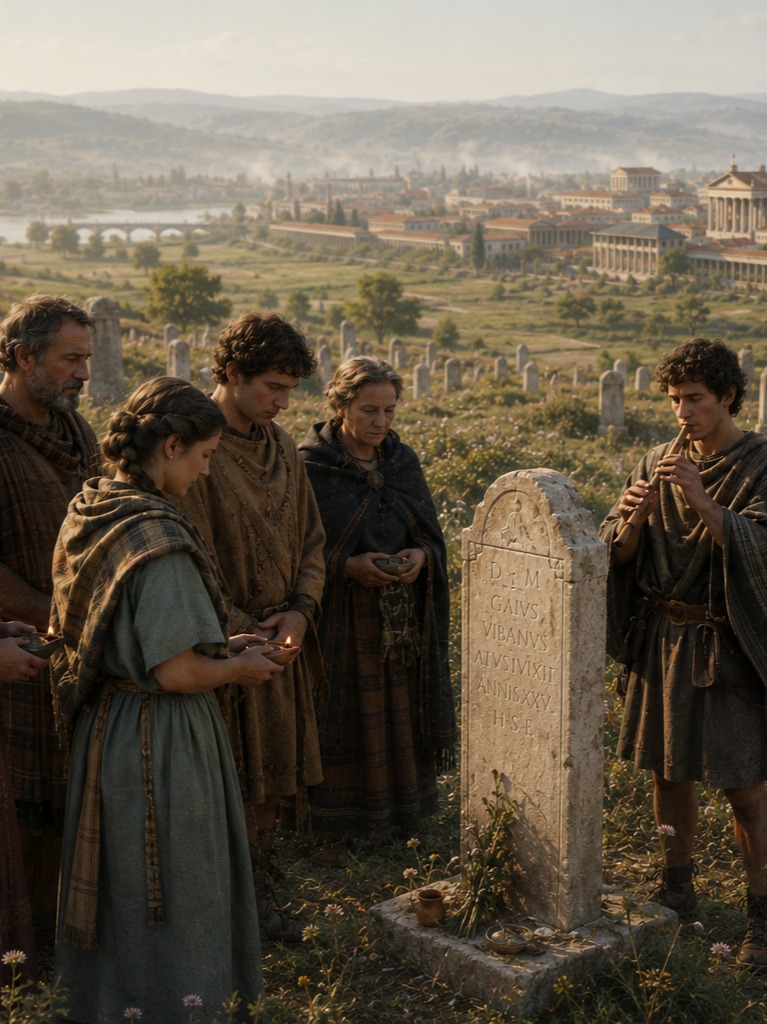
Roman funerary nenia, ritual lament, free chant, sad, dark, melancholic, not a song, no pulse, no meter, no percussion, archaeological reconstruction of a 2nd-century funerary rite in Roman Helvetia, male solo ritual recitation alternating with distant female mourners in unison, a cappella, monophonic vocal line, inspired by Roman neniae and local Celtic lament traditions, open-air Roman necropolis atmosphere, funerary monument outside the city walls, slow ceremonial procession, long pauses, sustained tones, natural resonance, solemn, dark, reverent, meditative, timeless, sacred burial grounds, focus entirely on the human voice, no harmony, no polyphony, no modern choir, no cinematic soundtrack, no instruments, no drums, no percussion, no rhythm section, free-flowing tempo, rubato, invocation of the dead and the ancestral spirits, Classical Latin pronunciation with clear diction, long vowels, restrained emotional expression, historically informed ancient Roman funerary prayer, ‑orchestra, ‑percussion, ‑drums, ‑beat, ‑strings, ‑fiddle, ‑violin, ‑harp
6:04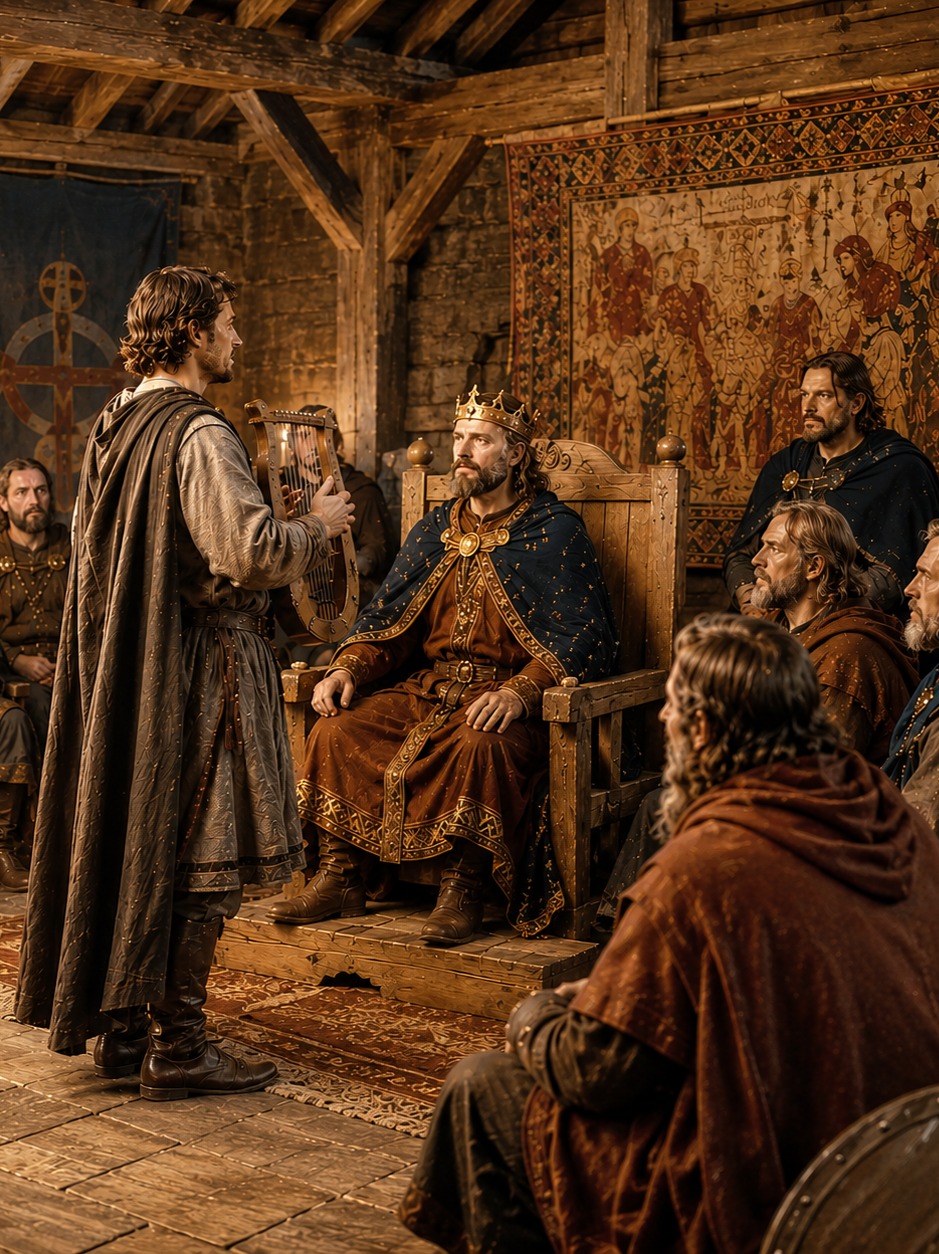
an epic 9th-century Carolingian vocal performance based on archaeological evidence and early medieval musicology, soft, slow, Perform the lyrics in Old High German (Althochdeutsch) with a single male voice, The delivery should be epic, slow, solemn, austere and declamatory, somewhere between speech and chant, following the natural rhythm and accentuation of the language, Use a monophonic Dorian or Hypodorian melody, free rhythm, no fixed meter, no harmony and no polyphony, Keep the music almost entirely voice-driven, with only a very soft, small german lyre in the background if accompaniment is used, No melodic accompaniment, The sound should be intimate, dry and natural, as if performed in a wooden hall around AD 850 with subtle natural reverberation, Emphasize historical authenticity, simplicity and textual clarity over musical complexity, soft, soft, soft, soft, ‑bagpipes, ‑hurdy-gurdy, ‑fiddle, ‑lute, ‑harp, ‑modern percussion, ‑cinematic effects, ‑Viking clichés, ‑and folk rhythms, ‑fiddle, ‑violin