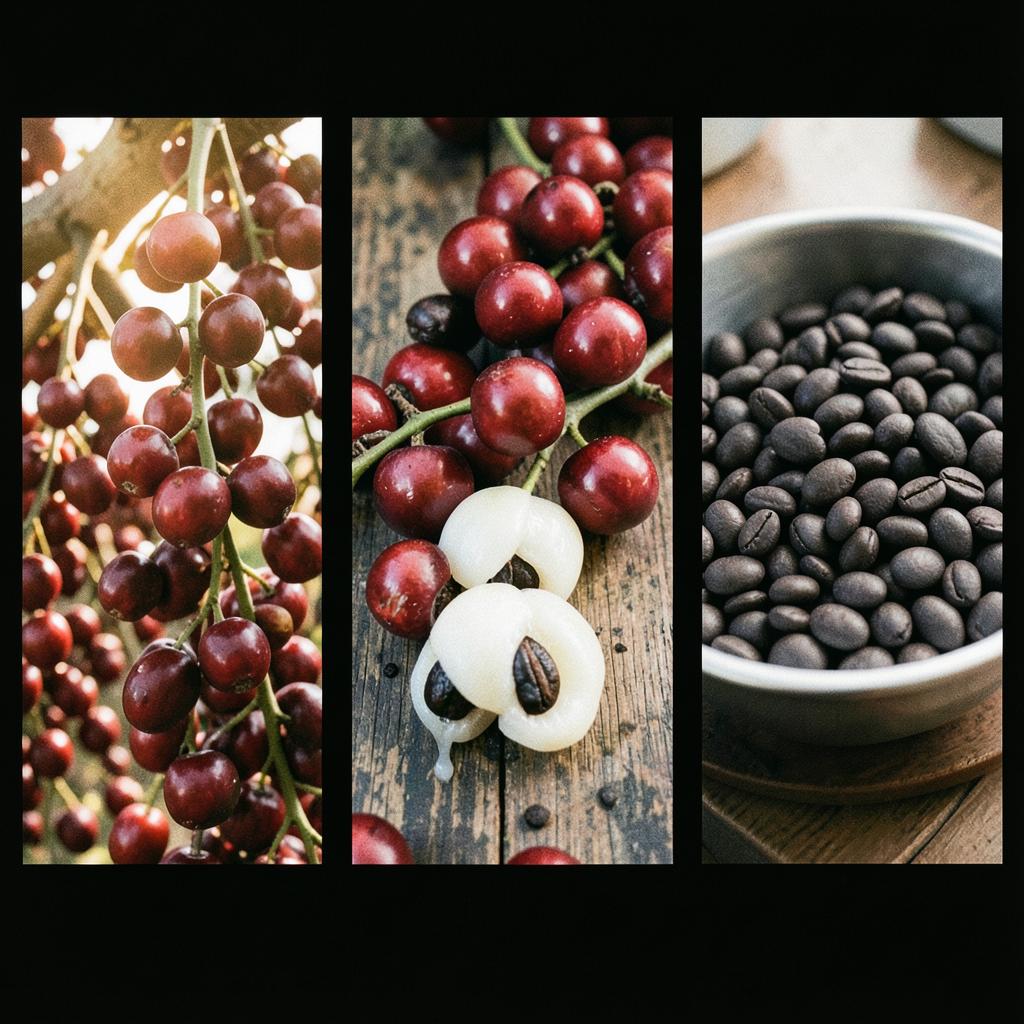
EPISODE 08 — HOW PROCESSING DIRECTS FLAVOUR

HOW PROCESSING DIRECTS FLAVOUR After coffee cherries are harvested, another critical stage begins. Processing. This is how producers separate the seeds from the surrounding fruit and prepare them for stable drying and storage. The method chosen—and how carefully it is managed—can strongly influence what we eventually experience in the cup. In natural processing, the whole coffee cherry is dried with the fruit still surrounding the seeds. Only after drying are the hardened fruit layers removed. When managed well, this method can contribute to pronounced fruit character, sweetness, body, and aromatic intensity. In washed processing, the skin and much of the fruit material are removed before drying. The remaining mucilage may be broken down through controlled fermentation and washing, or removed mechanically. Washed coffees are often associated with clarity and a more transparent expression of acidity—but the final result still depends on the coffee and how it was produced. In honey processing, the skin is removed while some mucilage remains around the seeds during drying. Depending on the fruit, the amount of mucilage retained, and the drying conditions, honey processing may help develop sweetness, texture, and complexity. These descriptions sound simple. But processing is never just about selecting a method. Producers must continually manage cherry quality, sanitation, fermentation, time, temperature, airflow, drying speed, water activity, moisture condition, and storage stability. Every decision carries consequences. Good control can help express sweetness, acidity, aroma, body, clarity, and balance. Poor control may lead to mould, uneven drying, inconsistency, excessive fermentation, or other undesirable characteristics. Processing can guide flavour, but it cannot magically transform poor raw material into excellent coffee. It directs and develops the potential already present in the fruit. Processing choices also extend beyond flavour. They influence water and energy use, labour requirements, waste management, production risk, investment, and ultimately, producer income. For me, processing is where agriculture meets craftsmanship, science, and sustainability. By the time we taste a cup, producers may already have made hundreds of decisions—many of them under changing weather, limited resources, and considerable financial risk. The more I understand coffee processing, the more respect I have for the people responsible for those decisions. Because flavour is not created by a processing label. It is developed through knowledge, observation, discipline, and care. The more I know, the more I understand how much work exists behind every cup.
